Pressure Cooker Chicken: Your Go-To Guide for Perfectly Cooked Poultry, Fast!
Hey there, fellow food adventurers! Ever had one of those days where dinner just needs to happen, like, five minutes ago? Yeah, we’ve all been there. That’s when the pressure cooker swoops in like a culinary superhero. And when it comes to chicken, this gadget is an absolute game-changer. Forget dry, bland chicken; we’re talking juicy, tender, fall-off-the-bone goodness in a fraction of the time. But how long do you actually cook chicken in a pressure cooker? That’s the million-dollar question, and I’m here to demystify it for you!
I remember my first pressure cooker; it sat in the back of my cabinet for months, looking intimidating. I’d heard stories of exploding pots (don’t worry, modern ones are super safe!), and the thought of high pressure just felt a bit much. But then, a friend convinced me to try a whole chicken. Skeptical, I followed her instructions. Twenty-five minutes later, I had the most succulent chicken I’d ever made, and a rich broth to boot. That’s when I became a true believer!
Why Pressure Cook Chicken, Anyway? The Nitty-Gritty Benefits
So, why bother with a pressure cooker when you could just use an oven or stovetop? Great question! Here’s why I’m such a fan:
- Speed, glorious speed: This is the big one. Pressure cooking significantly reduces cooking times. We’re talking minutes instead of hours for tougher cuts or whole birds. Perfect for those weeknight dinner emergencies.
- Tender perfection: The high-pressure environment forces moisture into the food, resulting in incredibly tender meat. Say goodbye to dry chicken breasts for good!
- Flavor bomb: Because ingredients cook in a sealed environment, flavors meld beautifully and become more concentrated. You’ll often find that your sauces and broths are richer and more intense.
- Energy efficiency: Believe it or not, pressure cooking uses less energy than conventional methods because it cooks faster. Good for your wallet and the planet!
- One-pot wonders: Many pressure cooker recipes are one-pot meals, meaning less cleanup. And who doesn’t love less cleanup?
It’s really about making your life easier and your food tastier. If you’re looking for more reasons to jump on the pressure-cooking bandwagon, Food Network has a fantastic article outlining even more advantages.
The Golden Rule: Factors Affecting Pressure Cooker Chicken Times
Before we dive into specific timings, it’s crucial to understand that it’s not a one-size-fits-all answer. Several factors will influence how long your chicken needs to cook:
1. Cut of Chicken Matters
This is probably the biggest differentiator. A delicate chicken breast will cook much faster than a bone-in thigh or a whole chicken. Think about it like this: smaller, less dense pieces need less time to come to temperature and cook through.
2. Bone-in vs. Boneless
Bone-in pieces generally take a little longer than boneless. The bone acts as an insulator, and it simply takes more time for the heat to penetrate and cook the meat evenly around it. Plus, the bone adds incredible flavor to your stock!
3. Size and Thickness
A thick, large chicken breast will need more time than a thin, small one. If you’re cooking multiple pieces, try to keep them roughly the same size for even cooking.
4. Starting Temperature (Frozen vs. Thawed)
Crucial point! If you’re cooking frozen chicken, you absolutely need to adjust your cooking time. Thawed chicken will cook much faster. While some recipes suggest cooking from frozen, I generally recommend thawing chicken first for the best, most consistent results and food safety. However, if you’re in a pinch, Serious Eats has some great guidelines for cooking frozen meat in a pressure cooker.
5. Your Specific Pressure Cooker
While most electric pressure cookers (like Instant Pots) operate at around 10-12 PSI (pounds per square inch) for high pressure, older stovetop models might have different pressure levels. Always refer to your appliance’s manual if you’re unsure. The timings I’m giving below are for standard high-pressure settings.
Your Cheat Sheet: How Long to Cook Chicken in a Pressure Cooker
Alright, let’s get to the good stuff! Here’s a handy table of approximate cooking times for various chicken cuts. Remember, these are starting points, so you might need to adjust slightly based on your specific situation.
General Steps for Pressure Cooking Chicken:
- Add trivet (if using for whole chicken or larger pieces) and liquid (usually 1-2 cups of broth or water), then the chicken.
- Secure the lid, ensure the vent is sealed.
- Select High Pressure and the recommended time.
- Once cooking is complete, allow for natural pressure release (NPR) or quick pressure release (QPR) depending on the recipe (more on this below).
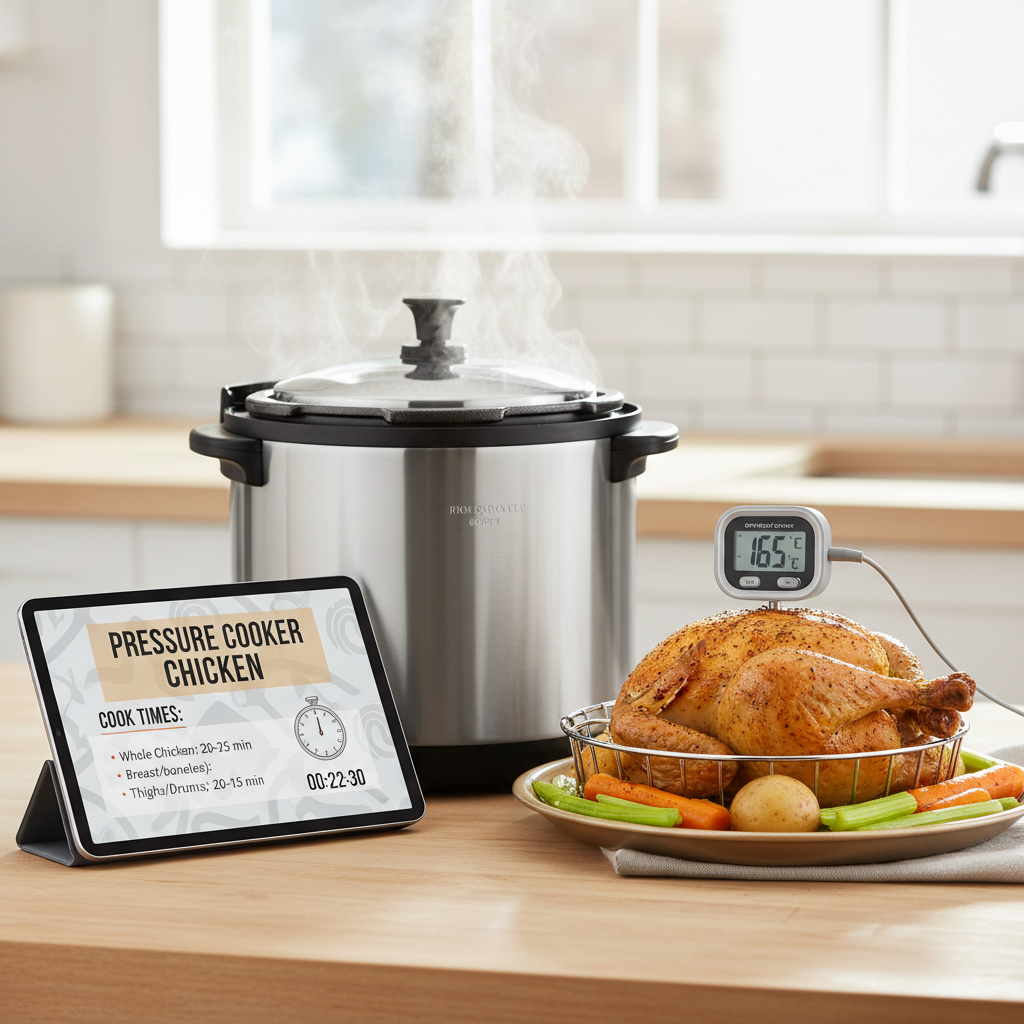
- Always check the internal temperature with a meat thermometer; poultry should reach 165°F (74°C) to be safe.
| Chicken Cut | Cooking Time (High Pressure, Thawed) | Release Method | Notes |
|---|---|---|---|
| Boneless, Skinless Chicken Breasts (1.5-2 lbs) | 8-10 minutes | 5 min NPR, then QPR | Great for shredding! |
| Bone-in, Skin-on Chicken Thighs (4-6) | 10-12 minutes | NPR (all the way) | Super tender and flavorful. |
| Boneless, Skinless Chicken Thighs (4-6) | 9-11 minutes | NPR (all the way) | Versatile for curries or stews. |
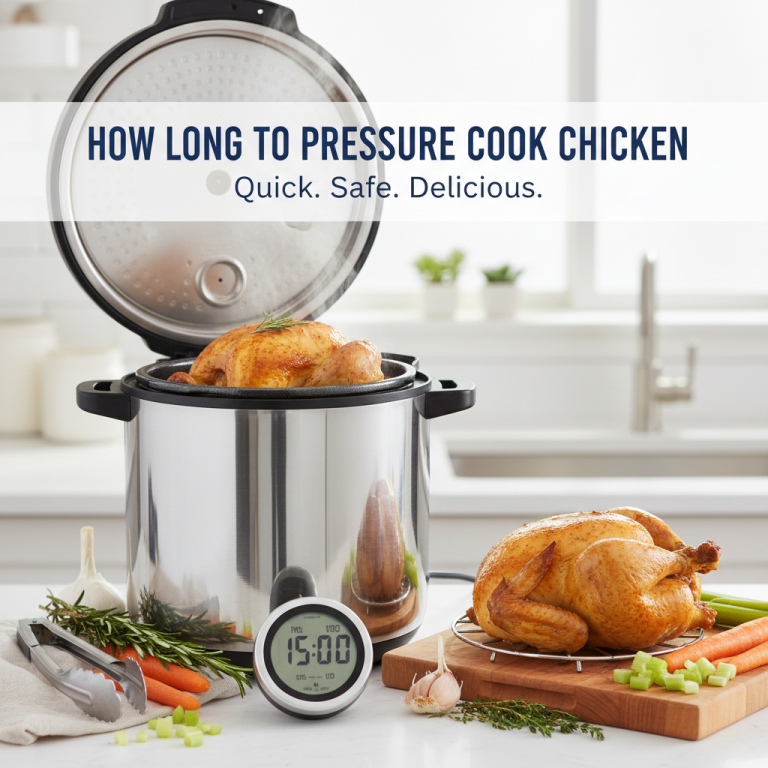
| Whole Chicken (3-4 lbs) | 20-25 minutes | NPR (all the way) | Ensure it fits comfortably in your pot. |
| Chicken Wings (1-2 lbs) | 8-10 minutes | QPR | Perfect for finishing in air fryer or oven for crispy skin. |
| Chicken Drumsticks (4-6) | 10-12 minutes | NPR (all the way) | Easy weeknight meal. |
A Quick Word on Pressure Release:
- Natural Pressure Release (NPR): This means you let the pressure release on its own, gradually. It takes longer (sometimes 10-20 minutes) but results in more tender meat and prevents foaming liquids from spraying everywhere. I usually prefer NPR for larger cuts and bone-in pieces.
- Quick Pressure Release (QPR): This involves manually opening the steam valve to release pressure quickly. It’s faster but can sometimes make delicate foods a little tougher or splash liquid. Good for quick-cooking items like vegetables or if you need to stop cooking immediately.
Always double-check that internal temperature with a meat thermometer. There’s no substitute for food safety! For more detailed info on safe cooking temperatures, check out the USDA’s guidelines.
My Favorite Pressure Cooker Chicken Recipe Hack: Shredded Chicken for Days!
If you’re anything like me, having pre-cooked shredded chicken on hand is a lifesaver. You can toss it in salads, tacos, quesadillas, soups, or stir-fries. My go-to method? Combine 2-3 boneless, skinless chicken breasts with 1 cup of chicken broth, a pinch of salt, and a dash of garlic powder in my Instant Pot. Set for 8 minutes on high pressure, then do a 5-minute natural release before quick-releasing the rest. Once done, remove the chicken and shred it with two forks – it literally falls apart! This simple technique has saved me countless meal prep hours.
Wrapping It Up: Embrace Your Pressure Cooker Power!
So, there you have it, folks! Cooking chicken in a pressure cooker isn’t just about speed; it’s about unlocking incredible tenderness and flavor with minimal effort. Don’t let that shiny appliance sit on your counter collecting dust. Give these times a try, experiment with your favorite recipes, and confidence. You’ll be amazed at the delicious, perfectly cooked chicken you can create in no time.
Go forth and pressure cook, my friends. Your taste buds (and your busy schedule) will thank you!