Pressure Cooker Potatoes: Your Cheat Sheet for Perfectly Cooked Spuds, Every Time!
Alright, let’s talk potatoes. Seriously, who doesn’t love a good potato? Mashed, roasted, baked, in a salad – they’re just so versatile and comforting. But sometimes, when you’re staring down a hungry crowd or just want dinner on the table ASAP, waiting for those spuds to boil feels like an eternity, doesn’t it?
That’s where the mighty pressure cooker swoops in like a culinary superhero! If you’ve been wondering, “how long to pressure cook potatoes?” or even “can you really pressure cook potatoes?” then you, my friend, are in the right place. We’re about to unlock the secrets to speedy, perfectly cooked potatoes, saving you time and giving you that delicious, tender texture you crave.
Why Pressure Cook Potatoes Anyway? The Need for Speed (and Flavor!)
Before we dive into the nitty-gritty of timings, let’s chat about why pressure cooking potatoes is such a game-changer. Beyond the obvious time-saving aspect (which, let’s be honest, is a huge win!), pressure cooking actually infuses more flavor into your food. The high-pressure environment forces moisture and flavor into the ingredients, resulting in potatoes that are often more uniformly cooked and richer in taste than their stovetop counterparts. It’s like a flavor sauna for your spuds!
Plus, it’s incredibly efficient. Unlike boiling where nutrients can leach into the water, pressure cooking often retains more vitamins and minerals. Think about it: less water, less evaporation, more goodness staying right where it should be – in your delicious potatoes. For more on the science behind pressure cooking, check out this great article from Serious Eats on the science of pressure cooking.
Your Potato Pressure Cooking Blueprint: Times for Different Types & Cuts
Now for the main event! The exact cooking time for potatoes in a pressure cooker isn’t a one-size-fits-all answer. It depends primarily on the type of potato and how you’ve cut it. But don’t worry, I’ve got you covered with a handy guide. Remember, these are general guidelines, and a quick fork-test is always your best friend.
Whole Potatoes: Baked Potato Perfection (Fast!)
Want that fluffy, tender “baked” potato texture without waiting an hour in the oven? The pressure cooker is your secret weapon. For whole potatoes, you’ll need to adjust based on their size.
- Small/Medium Potatoes (e.g., small Yukon Golds, red potatoes, ~2-3 inches): 8-10 minutes at high pressure.
- Large Potatoes (e.g., Russets, baking potatoes, ~3-4 inches): 12-15 minutes at high pressure.
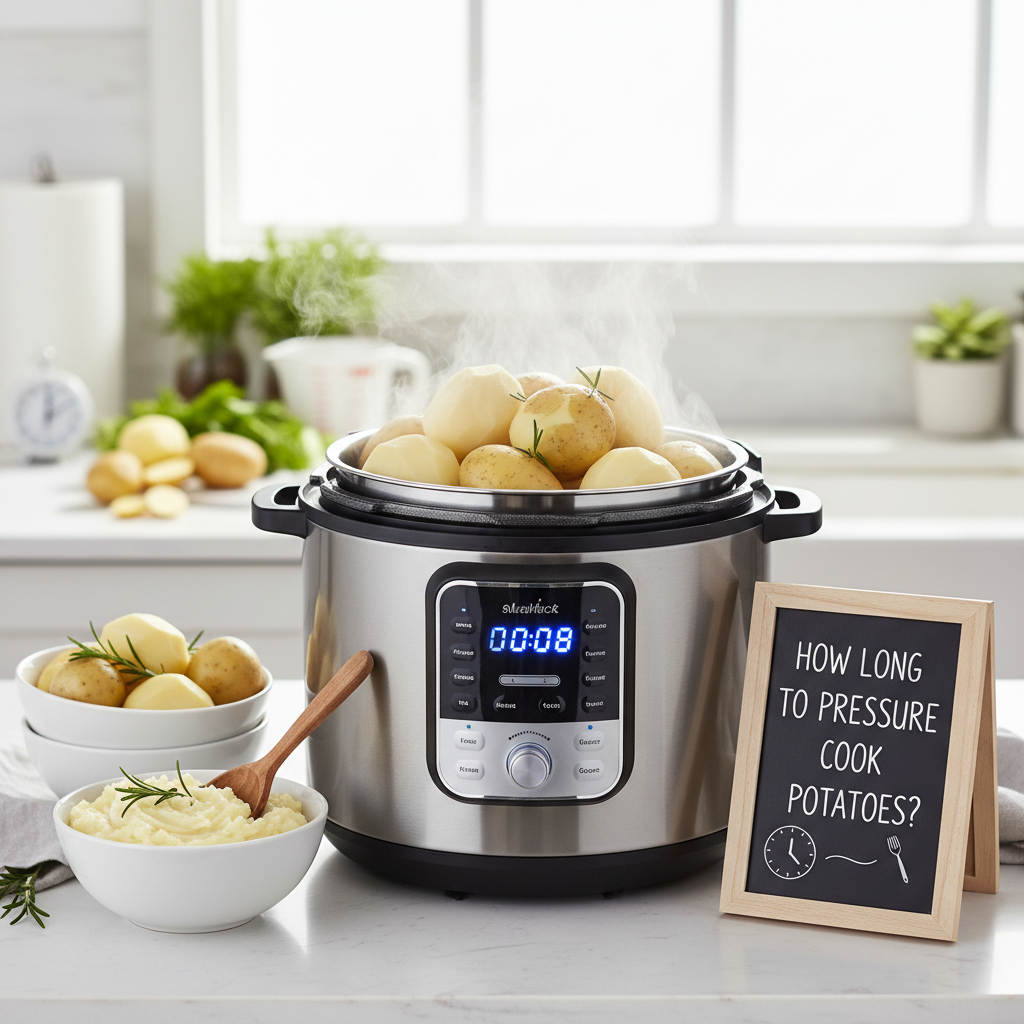
Method: Add 1 cup of water or broth to the pressure cooker pot. Place potatoes on a trivet above the liquid. Seal the lid, set to high pressure. Once cooking is complete, use a Natural Pressure Release (NPR) for 10 minutes, then Quick Release (QR) any remaining pressure. This dual release method helps prevent the skins from bursting and ensures a beautifully tender interior. If you’re new to pressure cooking, this guide from Hip Pressure Cooking is fantastic for beginners.
Cubed or Quartered Potatoes: For Mashed, Roasted, or Salads
This is where the pressure cooker truly shines for speed. If you’re making mashed potatoes, a potato salad, or even par-cooking potatoes for roasting later, this method is lightning fast.
- 1-inch cubes or quarters: 4-6 minutes at high pressure.
- Larger chunks (2-inch): 6-8 minutes at high pressure.
Method: Cut your potatoes uniformly (this is key for even cooking!). Place them directly in the pressure cooker pot with 1 cup of water or broth. Seal the lid, set to high pressure. After cooking, perform a Quick Release (QR) to stop the cooking process promptly. This prevents mushy potatoes, especially if you’re not mashing them immediately.
Sweet Potatoes: A Healthier (and Faster) Alternative
Sweet potatoes are fantastic in a pressure cooker too! They tend to cook a little faster than their white potato cousins.
- Whole Sweet Potatoes (medium): 10-12 minutes at high pressure.
- Cubed Sweet Potatoes (1-inch): 3-5 minutes at high pressure.
Method: Same as above – use a trivet for whole potatoes (with 1 cup liquid), or place cubed potatoes directly in 1 cup of liquid. For whole, use NPR for 5 minutes then QR. For cubed, use QR immediately.
Quick Note on Pressure Release:
- Natural Pressure Release (NPR): The pressure decreases slowly on its own. This is great for delicate foods or items that benefit from continued gentle cooking.
- Quick Release (QR): You manually open the vent to release steam rapidly. Excellent for stopping the cooking process quickly to prevent overcooking.
My Top Tips for Pressure Cooking Potatoes Like a Pro
I’ve learned a few things over my years of pressure cooking, and I’m happy to pass on some wisdom!
- Uniformity is Key: No matter how you cut them, try to make the pieces roughly the same size. This ensures they all cook evenly. No one wants half-raw, half-mushy potatoes!
- Don’t Overfill: Most pressure cooker manufacturers recommend not filling the pot more than two-thirds full for solids. Stick to this to avoid issues.
- A Little Liquid is Essential: Always add at least 1 cup of liquid (water, broth, even beer for an interesting flavor!) to the bottom of your pressure cooker for steam generation. This is crucial for the cooker to come to pressure safely. For more general pressure cooking advice, Wikipedia has a good overview of the technology.
- Season After: While you can season the water for flavor, for most potato dishes, it’s best to season after cooking. This gives you more control and prevents the potatoes from becoming too salty if too much liquid is absorbed.
- Test for Doneness: Just like with stovetop cooking, a fork test is your best friend. If it slides in easily, they’re done. If there’s resistance, they might need a minute or two more (you can return them to pressure for a quick burst if needed, or simply let them sit covered for a few minutes in the residual heat).
- Be Mindful of Potato Type: Waxy potatoes (like red or Yukon Gold) tend to hold their shape better when cooked, making them ideal for potato salads. Starchy potatoes (like Russets) break down more easily, perfect for ultra-fluffy mashed potatoes.
Putting It All Together: Your Dinner Just Got Faster!
So there you have it! No more wondering how long to pressure cook potatoes. With these timings and tips in your culinary arsenal, you’re ready to tackle everything from a speedy weeknight mashed potato side to perfectly tender potatoes for your famous potato salad. The humble potato just got a whole lot more exciting (and quicker!) thanks to your pressure cooker.
Go forth and cook those spuds with confidence! Your taste buds (and your busy schedule) will thank you.